

How to belong
= Live laugh love.

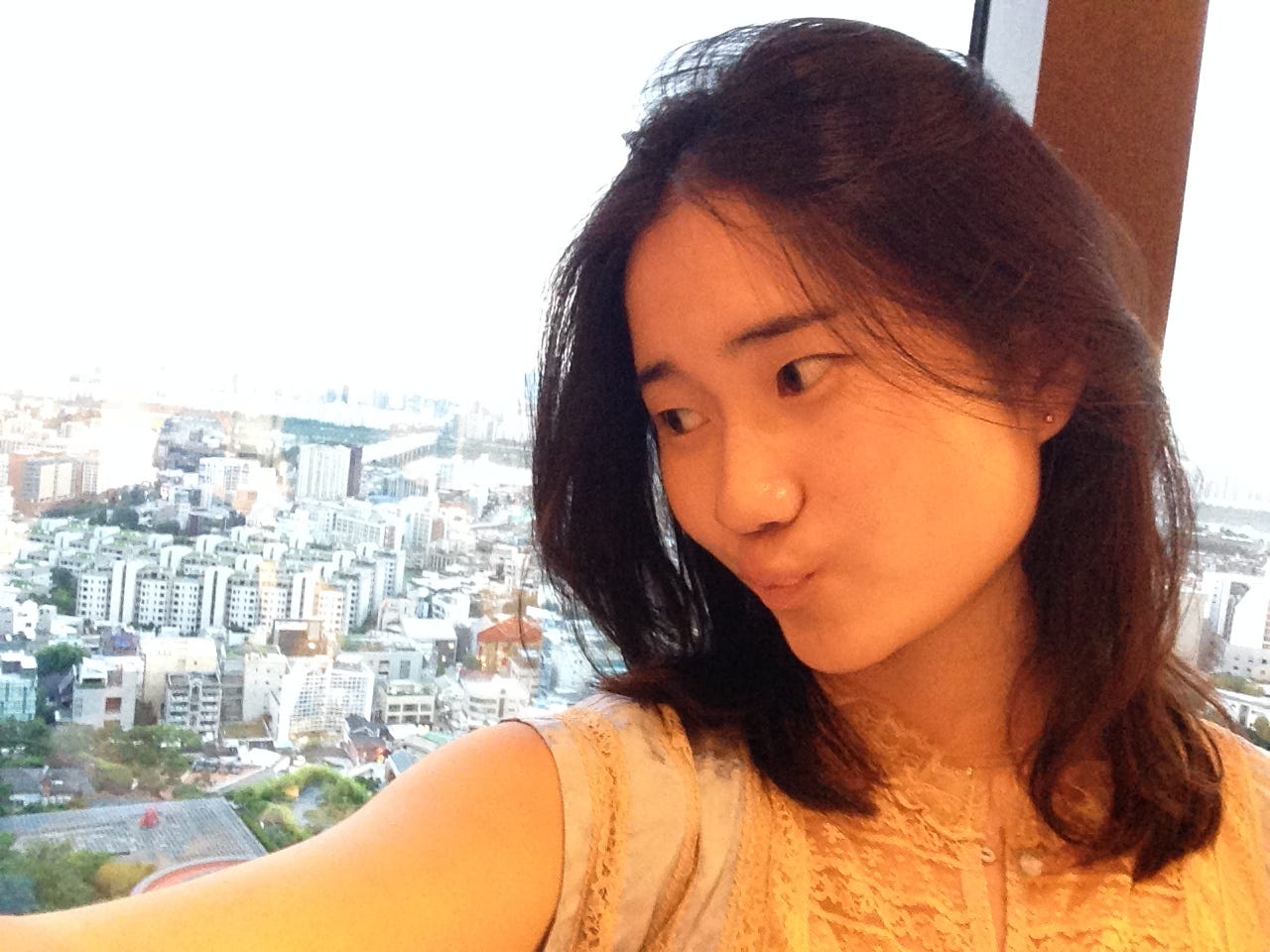
These days, upon arriving back in Korea, I’ve been feeling that Korea is our country and America is mine. I don’t think the two will ever translate into each other. The biggest distinction is obviously that my family is Korean, and my family’s family, and despite my dad’s stints in Philly and Iowa, Korea is instinct to us in a way that America never will be. I have been primed for this country’s terrain, climate, and people before even being born.
At the same time, I have realized much of myself in the U.S. Though I’ve always lived here with my family never too far away, the effect of having gone to boarding school and now being away for college is that I feel like I’ve raised myself these past few years. Not in any practical sense, my survival skills are slim to none, and my mom and friends have helped me through so much (crying in Stimson, crying in Hewitt, same difference). But in the physical sense, each time my reality was crushed, I was the only one there for myself. I don’t mean that in a lonely, self-pitying way. If anything, I mean that gratefully, because I now understand myself better than I could’ve otherwise. It’s like the trust that comes with having secrets. I have these secrets with myself because I was by myself through the critical growth spurts of high school and college, and so I trust myself more. And because all of this took place in the U.S., my self-esteem, confidence, and so many other things I like about myself are braided with this country and its air.
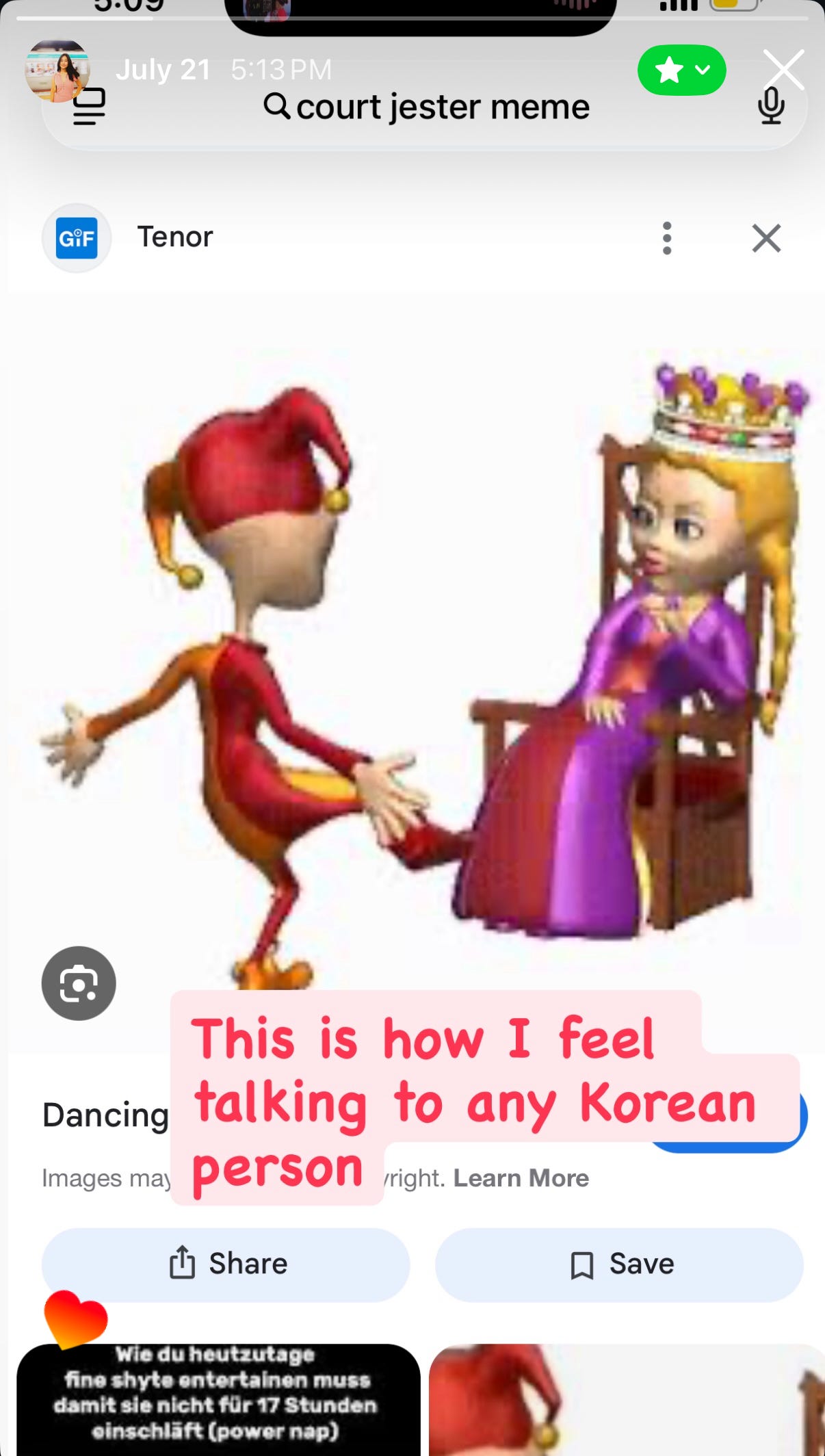
I really do feel like the court jester when I’m talking to Korean people. I feel like I’m too much, doing too much. Coming from a culture that encourages you to share yourself and to invite others to share themselves, a culture that yields itself to spontaneous connection and its possibilities, I find myself constantly saying more than everyone else, sharing things about myself that they seem surprised I’m volunteering. I’m not sure if I’m crossing these lines because I genuinely don’t know they’re there, or because I’m frustrated by them and want to use cultural inexperience as a cover to break through the generic interactions I’m otherwise forced to patiently enact. I think both.
It’s funny being Korean now when people fetishize being Korean. March is my Koreaboo month, when I suddenly get hit with some nauseating wave of missing Korea and start consuming really bad Korean content. The world enables me, thank you BTS. I literally went to school in Korea, but I start daydreaming about how fun it could’ve been (it was fun, but not because there were cute guys who bought me banana milk after school).
In an English essay I wrote my senior year of high school, called “My Belonging Flounders,” I wrote:
“Sometimes, I feel like my body rejects belonging anywhere by not wanting to be wherever I am. I feel like my runaway tendency latched onto my polarized childhood and festered so that I’ll long to be somewhere else forever, no matter where I am. When I’m in America, I delude myself into treasuring Korea for the anemic hallways and camaraderie from suffering together from tests. When I’m in Korea, I delude myself into yearning for America for rowdy football games and suburbia. Despite knowing full well what both countries are like, I let myself forget so that I can hold that promise of something better.”
I don’t feel this way anymore. My resolution wasn’t the “home is where the heart is” BS. Instead, I finally relaxed when I realized that we are all inhabitants of Planet Earth.
Which sounds DUMB. But this originates from my 2026 Theme that you only have to get to know people to love them. And to get to know people, there is no way around but to poke, punch, cradle, caress them in the faith that they are worth getting to know until they trust you enough to show themselves to you. If belonging in a place is largely about having a support system and understanding your environment, you possess the ability to achieve those both of those things if you are willing and just a tiny bit brave enough to do the hard work of getting to know the people where you are. Because we’re all just overthinking creatures on a swirly blue-green marble frothed over in white.
I remember saying in some interview that Andover’s (PR boasting of, but also real) diversity taught me not so much that we are all different, but rather that we are more similar and have so much more in common than we might think. The external factors that we use to delineate identity and form groups, like hometown, race, gender, class, are not as divisive or decisive as you might think. Diversity helps you realize you can connect with anyone if you are honest with yourself. You can’t connect with people if you’re donning some extra, decorative version of yourself, because by assuming what the other person wants from you, you’re already projecting yourself onto them and blocking their real self from emerging. But when you wrest rigorous honesty from yourself, you coax honesty, authenticity, and fun out from others. I think everybody’s fun when they’re being themselves.
This is my blabbering way of saying that I’m going to keep barging in on conversations and asking borderline personal questions while I’m in Korea this summer (within reason). Sure, Koreans may have been trained to color inside the lines, but not enough for each person to lose what makes them special.
One of my favorite Korean lines translates roughly into “There are so many compelling forms of life.” Belonging is about realizing that you can belong wherever because life is what you make of it; it’s living life more thoroughly, with more effort. Living life more. Living laughing loving, really. ☮️ And you can do that anywhere, even on Mars.